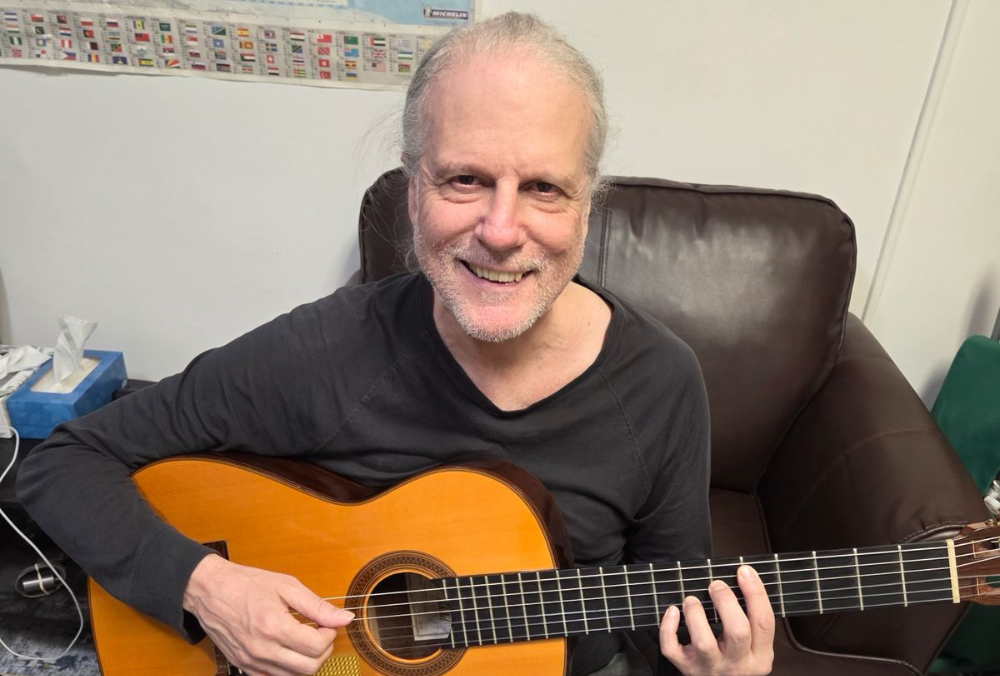
There’s nothing rushed or overworked about Sandy Ortega’s music. It doesn’t feel designed to impress. Instead, it feels like something that arrived on its own time. Rooted in Spanish guitar, his work carries a quiet depth that comes from repetition, solitude, and a deep trust in the process rather than control over it.
Much of Ortega’s life as a musician is spent alone. Spanish guitar demands discipline — hours of practice, careful attention, and constant return to the instrument. Over time, that isolation becomes part of the sound. But for Ortega, the real challenge isn’t technical. It’s learning not to think. When the mind gets involved, the music stiffens. When it steps aside, something honest slips through. That’s where his songs come from — not from planning, but from presence.
Listening back to his earlier releases, Ortega doesn’t hear a beginning stage that needed fixing. He hears beauty that was already there. What’s changed is his awareness. Over the years, he’s learned to remove himself from the center of the process. His hands, he says, don’t feel entirely his own anymore. They’re guided by something beyond him, something he trusts even when he doesn’t fully understand it.
That trust doesn’t always come with clarity. Sometimes Ortega isn’t sure what a piece means while he’s writing it. Understanding arrives later, through time and reflection. And when it does, the result can feel unexpectedly powerful — even to the person who created it. It’s a reminder that the best moments aren’t always the ones we try to force.
Ortega talks about his journey not as improvement, but as release. Moving away from the self, letting go of ego, and allowing the music to exist without interference. Each composition becomes less about expression and more about listening.
In a music culture that often rewards noise and immediacy, Sandy Ortega chooses stillness. He creates by stepping back, trusting that when there’s enough space, the music knows what to do.