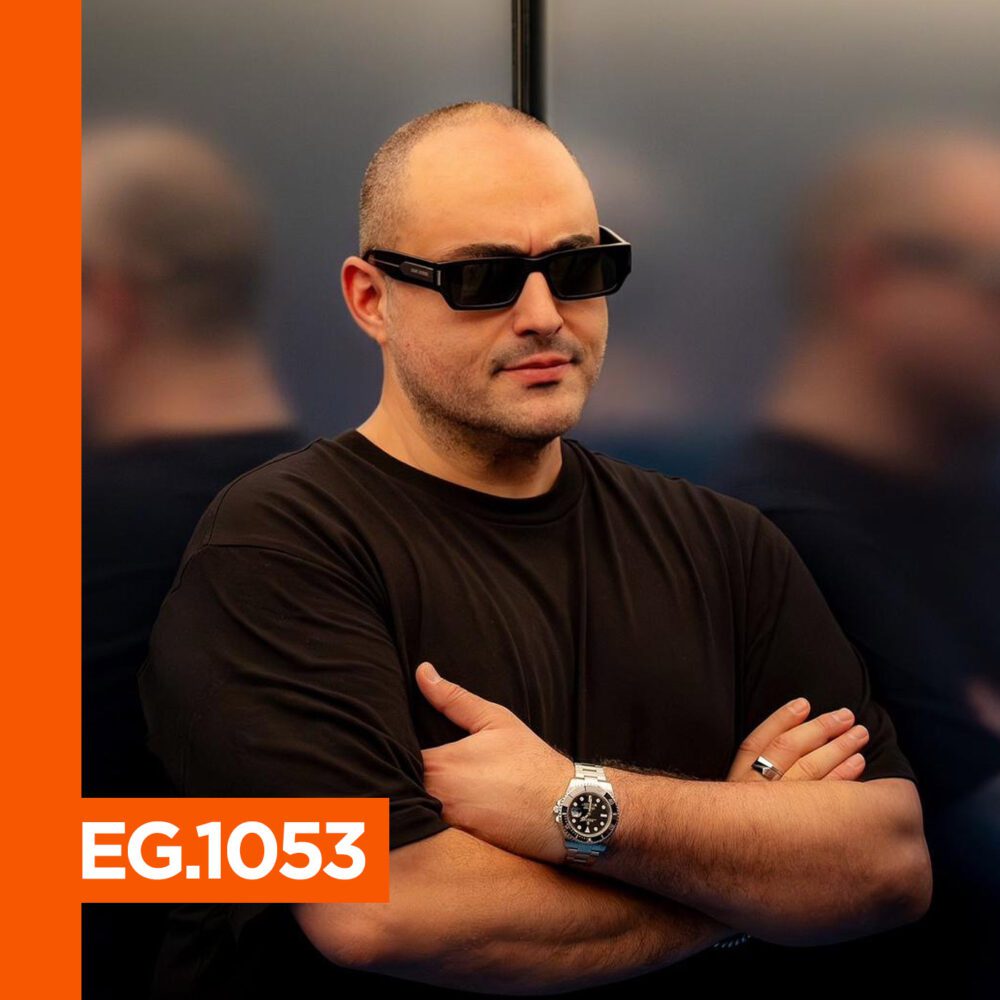
A mainstay of the Parisian scene for over two decades, Fabrice Dayan has built a reputation around deeply curated residencies, a sharp sense of artistic direction, and a devotion to club culture’s emotional core.
Photo credit: Fabrice Dayan – Official
From his early days at Les Bains Douches and Raspoutine Paris to his current home at Silencio, his approach to nightlife goes beyond the decks — emphasizing community, memory, and musical honesty.
Dayan is also the founder of Voyeur Music, a label that champions eclecticism and artistic freedom over formula. Its catalog includes contributions from names like DJ Gregory and Adassiya, with tracks like ‘La Maza’ and ‘Time Not Alone’ gaining new life years after their release. Now expanding into new imprints like VOYOU and 5:55 MUSIC, and alternating time between Paris and U.S. cities like New York and Miami, he continues to resist the pull of hype in favor of lasting connection.
In this conversation, Fabrice opens up about the purpose of residencies, the failures of social media-driven nightlife, and why “music is the answer” in a world full of noise.
EG: Hi Fabrice, it’s great to connect. Where are you today, and what kind of energy is surrounding you at the moment?
Fabrice Dayan: Hello EG team, thanks for the invite! I’m feeling super good, thank you. I’m based in Paris but moving a lot between NYC, Miami, and L.A. I’m really excited to finish a year full of lessons, encounters, and experiences, and I’m eager and curious to see what the next one holds for all of us! I feel like a whirlwind of positive things is coming up. Everything has accelerated since 2020, and I think music is finally going to return to a more central and essential place it deserves to be.
EG: You’ve lived through several eras of Paris nightlife. What is the earliest experience that truly shaped your identity as an artist and made you realize this path was your calling?
Fabrice Dayan: The very first one truly began with Les Bains Douches. That club was the epicenter of sophisticated nightlife in Paris, tied to a kind of musical avant-garde. It was the mid-90s, during the French touch years and the Rave era, where LGBT crowds, outsiders, and the haute bourgeoisie mingled perfectly. More than the venue or music, it was the crowd that shaped me. Clubs thrive when they create a united community around a single dynamic: remembering our own humanity.
EG: With so many years as a resident, what do you feel is the true purpose of that role, and how do you approach the responsibility of guiding a crowd week after week?
Fabrice Dayan: Being a resident DJ lets you do something a 90-minute festival set never can. It creates a world you can’t find anywhere else — a more precise, more intimate story. When people used to say, “We’re going to listen to Danny Tenaglia“ at Twilo or “Victor Calderone“ at Roxy, it was about connection, not just the venue. It’s the only real master category in our art. I’ve done marathons many nights, carrying the music on my shoulders. If you can’t last four hours, maybe a library’s a better place for you.
EG: If a young DJ asked you for a single piece of advice before taking on their first residency, what would you tell them to focus on first?
Fabrice Dayan: First of all, never arrive first when the project opens. Let someone else deal with the owner’s early mistakes. Then, make the venue yours. A resident DJ must turn it into a sacred space. Your musical culture, taste for risk, and emotional control are key. Don’t play to impress — focus on the early arrivals, watch the room, and make the first person in the last one to leave. If you feel the urge to dance with them, you’re in the right place.
Also, no business behind the decks if you can’t beatmatch by ear or if your playlists are just Shazam grabs. Avoid ego. Word of mouth will always be your best PR. You’re soundtracking people’s lives — respect that.
“Technology isn’t scary — people who control it are. Music not made by humans? That’s already here. How many artists put their names on ghost productions? AI might reveal more about our own humanity”
EG: You witnessed the evolution from early house and the rave era to today’s social media-driven nightlife. What do you feel has changed the most in the way people experience music together?
Fabrice Dayan: The word “together” is exactly what’s changed. Before, clubbing was a primal, shared need. Today, people use screens to invent personas and end up alone. Social media has killed the vibe. People buy tickets only to watch the show through a phone. There’s no real experience anymore. It’s become fast food. Promoters are buying content, not talent. And as The Prodigy recently said, “Social media is turning music into fast food.”
EG: For someone trying to understand today’s Paris, which nights, venues, or voices do you feel are genuinely shaping the city, and what makes them stand out?
Fabrice Dayan: Midweek, I’d say Mirage or KÖMMA on Wednesdays. For raw techno, FVTVR is unmatched — they book legends like Carl Craig, Kevin Saunderson, Richie Hawtin, and new talent too. Then there’s T7, GATE, and YOYO at Trocadero. Classic spots like Rex Club or Djoon still matter — especially the DISCOVERY night by Young Pulse.
Silencio, my monthly residency, is something else. Three levels underground, no phones, red lights, cocktails with people you usually see onstage. It’s a playground for creative minds. Not for everyone — the door is tight — but if you want to feel what Paris really is, that’s it.
As for emerging talent: Selim Sevade, Baron, II Faces, Matteo Diop, Villanova with Indie House Records, and others like Blake, Messina, Mellow, Yahmi, Saverio, or Bagheera — artists focused more on music than image.
EG: After spending several years between New York, Los Angeles, Washington DC, and Miami, how would you describe the current state of American club culture through your own experiences?
Fabrice Dayan: New York has reinvented itself post-EDM. Gospel NYC in Soho offers intimate, soulful nights — catch Monobase or Vanjee there. In Miami, Mila and Casa Neos are reshaping nightlife by blending top-tier food and music. Arcade in DC is pure fun — no phones, you enter through a fridge door. Los Angeles? Less exciting. Clubs close too early, though Members is worth a visit. But overall, North America is rediscovering its 90s roots — and doing it well.
EG: Voyeur has been part of your life for nearly a decade. Looking back, which moments or releases best capture the spirit you imagined when you created the label?
Fabrice Dayan: I’m always surprised when old tracks resurface. ‘La Maza’ is still a classic. Vintage Culture playing ‘Time Not Alone’ gives it new life. ‘Rebirth’ by Supermen Lovers, remixed by Antony Toga, still hits. I never promoted the label hard — I let DJs find it themselves. Being a good artistic director and talent scout doesn’t pay the bills in indie electronic, but the spirit is there.
EG: You’re expanding with new imprints like VOYOU and 5:55 MUSIC. What possibilities are you hoping to open with these new directions?
Fabrice Dayan: A lot of what I receive now is more mainstream — Hip Hop, Rock, Indie. I’m curious to see if it’ll work on the radio. But it has to be fun for me. That’s the only rule. Real is the next trend.
“Social media has killed the vibe”
EG: How do you see AI fitting into music and nightlife in the coming years, and what questions does it raise for you as both a producer and label owner?
Fabrice Dayan: Technology isn’t scary — people who control it are. Music not made by humans? That’s already here. How many artists put their names on ghost productions? AI might reveal more about our own humanity. I want to see a punk spirit come back. I’m tired of this whitewashed Afro-house culture — some artists don’t even know the roots of the music they’re mimicking. That needs to change.
EG: When you imagine the future of nightclubbing, what do you think will matter most for creating meaningful experiences, and where do you see Paris in that conversation?
Fabrice Dayan: The future of clubs is about community. The bar-based model will fade as younger generations drink less. Only those offering real, meaningful experiences will remain. I’m watching closely.
EG: Outside the booth, what helps you stay centered and curious, especially during periods of heavy touring or creative pressure?
Fabrice Dayan: I still dig records, all the time — things I missed, lost, or just want to feel physically again. I don’t watch much TV. And I’m not heavily touring — U.S. trips every few weeks are manageable. I prefer deep, recurring connections through residencies. That intimacy is what keeps me going.
EG: Thanks for the time and all the best!
Fabrice Dayan: Same same! And best wishes for 2026!
Fabrice Dayan’s ‘I Didn’t Know My Name’ is out now on Voyeur. Stream and download here.
Follow Fabrice Dayan: Spotify | Soundcloud | Instagram