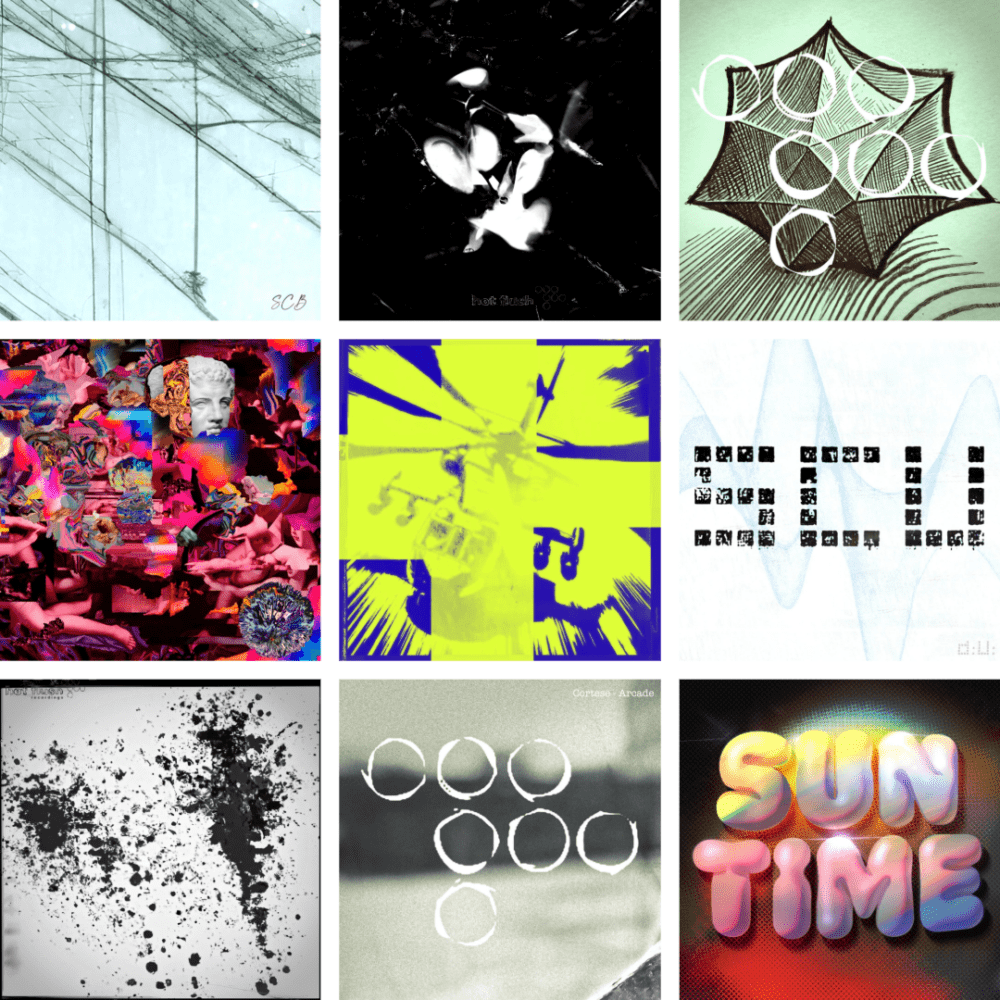
When Paul Rose founded Hotflush Recordings in the early 2000s, the label was never conceived as a lifestyle brand, nor as a genre flag planted in the sand. It emerged instead from a very specific frustration: the narrowing of possibility within electronic music at a moment when tools, technology, and global connectivity should have been expanding it. What followed was not a linear ascent, but a restless, often disruptive body of work that would go on to quietly rewire the relationship between dubstep, techno, house, and experimental club music.
Hotflush has never been about dominance. Its influence lies elsewhere; in its refusal to stabilize, in its willingness to abandon winning formulas, and in its insistence that club music could evolve without seeking consensus.
Hotflush began as an outlet for Scuba’s own productions, initially rooted in the dubstep continuum that was coalescing around London in the mid-2000s. At the time, dubstep was still porous and undefined — closer to an ecosystem than a genre. The earliest Hotflush releases sat comfortably alongside the sounds coming from labels like Tempa and Hyperdub, yet even then, there was a subtle divergence. Where much of dubstep leaned into reduction and negative space, Hotflush tracks often hinted at density, propulsion, and a more overt relationship with the dancefloor.
That divergence would soon become central to the label’s identity. Rather than protecting dubstep as a cultural artifact, Hotflush treated it as raw material — something to be tested, stretched, hybridized, and ultimately moved beyond. This philosophical stance would prove crucial as the sound fractured, commercialized, and, in some cases, calcified. Hotflush never attempted to “save” dubstep; it simply kept moving.
One of Hotflush’s defining traits has always been its approach to curation. The label does not present itself as a closed aesthetic loop, nor does it rely on a rigid sonic signature. Instead, its catalog reads like a sequence of adjacent conversations — artists and releases linked not by sound, but by intent.
Early on, this manifested through the inclusion of producers who would later become central figures in modern club music. Artists like Joy Orbison and Mount Kimbie didn’t merely pass through Hotflush; they used it as a space to articulate ideas that didn’t yet have a clear home elsewhere. Their releases on the label captured moments of transition — tracks that felt unfinished in the best possible way, still negotiating their own language.
This openness was not accidental. Rose has often framed Hotflush less as a label and more as a platform for exploration, where uncertainty is not a liability but a requirement. The goal was never to predict where club music was going, but to allow artists room to arrive there on their own terms.
As the 2010s approached, Hotflush underwent its most significant transformation. Rather than doubling down on dubstep as it gained mainstream traction, the label pivoted — decisively and without apology — toward house and techno. For some, this appeared opportunistic. In retrospect, it was anything but.
The shift reflected a broader realignment in how club music was functioning globally. DJs were no longer siloed by tempo or genre; sets became longer, more fluid, and more narrative-driven. Hotflush releases from this era mirrored that sensibility, prioritizing groove, hypnosis, and long-form tension over immediacy.
Scuba’s own evolution as an artist ran parallel to this shift. His transition into techno was not framed as reinvention, but as continuation. The same curiosity applied to a different rhythmic framework. Hotflush followed suit, becoming a home for records that emphasized momentum, structure, and physicality without sacrificing detail.
Perhaps Hotflush’s most enduring contribution lies in what it has consistently avoided: the crystallization of a “Hotflush sound.” In an industry increasingly obsessed with branding and recognizability, the label’s refusal to lock into a single aesthetic has been quietly radical.

This resistance to homogenization has allowed the label to remain relevant without chasing relevance. When minimal techno surged, Hotflush did not become a minimal label. When melodic house gained dominance, it didn’t pivot toward emotional shorthand. Instead, the label continued to release music that trusted DJs and listeners to meet it halfway.
That trust is fundamental. Hotflush assumes competence. On the part of the artist, the DJ, and the audience. It does not over-explain itself, nor does it attempt to flatten complexity for broader appeal.
Another key to Hotflush’s longevity has been its pragmatic understanding of how music is actually used. Many releases function as tools — not in the reductive sense of utility tracks, but as flexible components within longer narratives. Tracks are built to sit inside extended mixes, to evolve over time, to reveal new details across repeated listens.
This sensibility reflects Rose’s own background as a DJ and club-focused artist. Hotflush records rarely demand attention; they reward it. Their strength lies in accumulation rather than impact, a quality that has become increasingly rare in an era dominated by algorithmic immediacy.

Hotflush’s independence has never been loudly proclaimed, yet it has shaped every aspect of the label’s operation. From release schedules to artist relationships, decisions are guided by sustainability rather than scale. The label has expanded when it made sense and contracted when necessary, without the pressure to maintain artificial momentum.
This flexibility has allowed the brand to survive moments that have swallowed less adaptable imprints — shifts in distribution models, changes in DJ culture, and the constant churn of stylistic cycles. Its endurance is not the result of nostalgia or legacy capital, but of continuous recalibration.
Looking back across more than two decades of releases, Hotflush appears less like a catalog and more like a trajectory. It charts not just the evolution of specific genres, but the changing conditions under which club music is made, played, and understood.
[embedded content]
Hotflush never positioned itself as a tastemaker in the traditional sense. Instead, it functioned as an early warning system, picking up on undercurrents before they surfaced, then moving on before they hardened into orthodoxy. In doing so, it helped normalize the idea that electronic music could be exploratory without being marginal, functional without being conservative.
Today, Hotflush occupies a peculiar but vital position. It is neither archival nor trend-driven, neither experimental for its own sake nor beholden to dancefloor orthodoxy. It exists in a productive state of tension — always slightly misaligned with the moment, and therefore capable of pushing it forward.
That unresolved quality may be its greatest achievement. In a culture increasingly fixated on clarity, Hotflush continues to value ambiguity. Not as an aesthetic choice, but as a working principle. It reminds us that electronic music’s most important developments often occur not at the center, but at the edges, where definitions blur, and certainty dissolves.
For a label that began as a personal outlet and evolved into a quiet engine of change, Hotflush’s legacy is not a sound, a scene, or a statistic. It is a way of thinking. One that remains as relevant now as it was at its inception, precisely because it refuses to settle.
Follow Hotflush Recordings: Website | Instagram | YouTube | Spotify