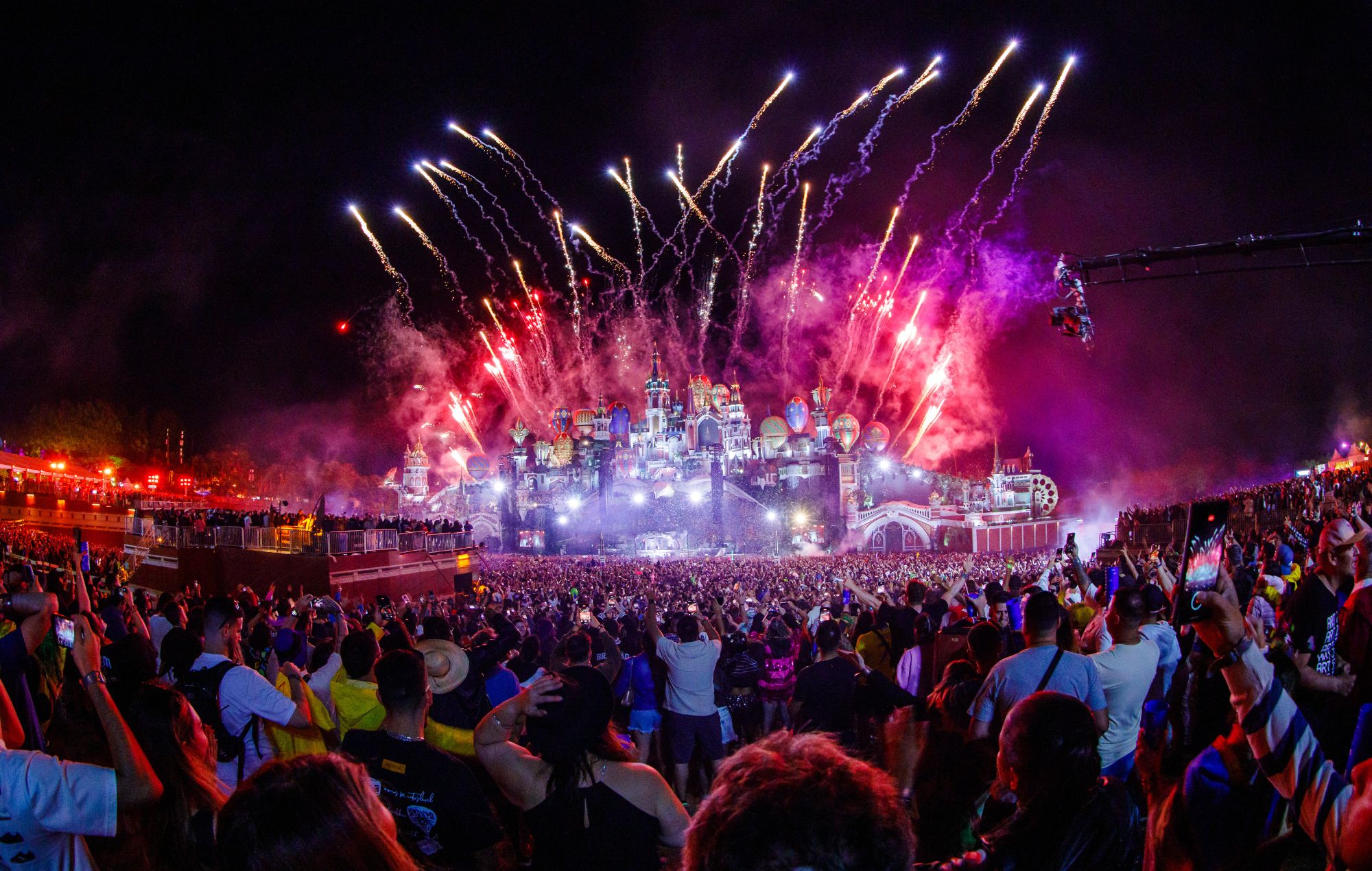
Tomorrowland has confirmed that it will be banning “large-scale” fireworks and utilizing only “limited pyrotechnics” for the remainder of its 2026 edition due to ongoing wildfire fears. The restrictions were introduced ahead of the festival's first weekend, following recommendations from local authorities in Belgium as the country faces a 'Code Orange' risk for wildfires caused by extreme heat.
With the second weekend of the festival now underway, organizers have confirmed that these safety measures will remain in effect until the event concludes on Sunday night, July 26. Only the main stage is permitted to use pyrotechnics, and these are restricted to T1 and T2 effects—smaller, more easily controlled variations compared to the high-altitude displays seen in previous years.
Organizers emphasized that daily safety assessments are being conducted to determine if any pyrotechnics can be safely deployed. In addition to the fireworks restrictions, the festival has implemented a strict ban on personal barbecues and cooking equipment at the campsite, providing communal cooking areas for attendees instead.
Performers scheduled for the second weekend include Calvin Harris, ALOK, Mall Grab, and Indira Paganotto.
The current climate conditions have impacted numerous events across Europe. Last month, the 50,000-capacity dance event Defqon.1 in The Netherlands was forced to cancel due to a 'Code Red' warning for extreme heat. Similarly, a headline performance by Katy Perry near Brussels was canceled due to severe thunderstorms, and dance-rock legends The B-52’s saw their set at France's C Trop Music Festival called off just minutes before they were due to take the stage.
Reflecting on the broader impact of these weather patterns, Holger Schmidt of the European Festivals Association noted the unprecedented nature of the current heatwaves, stating that organizers are reaching a tipping point where the safety of visitors and staff must take absolute precedence over production elements.