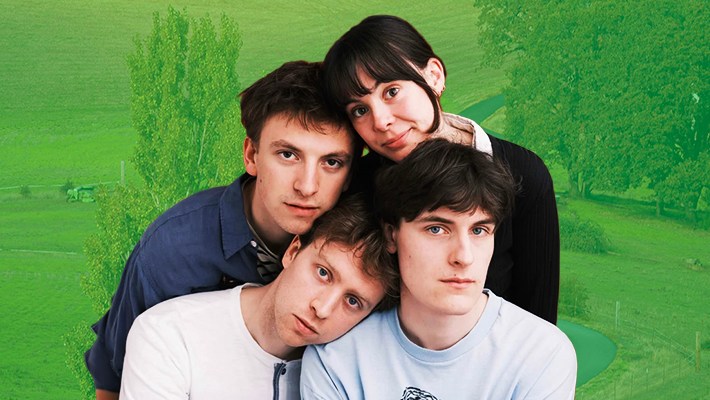

While many critics initially categorized Lily Seabird within the burgeoning 2020s alt-country movement—largely due to the twangy resonance of her 2025 release Trash Mountain—the artist herself resists such narrow definitions. Her latest project, Lightspheres On Their Way, reveals a far more complex sonic palette. Rather than leaning into the tropes of country-rock, Seabird draws from the minimalist, drone-focused experimentation of the Velvet Underground, the raw spirit of Ween, and the patient, meditative qualities of the Grateful Dead.
The Pennsylvania native, who cut her teeth in the Burlington, Vermont music scene alongside collaborator Greg Freeman, explains that her music is less about genre-specific aesthetics and more about capturing a specific mood. Reflecting on her recent appearance at Americana Fest, she admits that the "Americana" label feels like a significant stretch. "I don't even think I make country rock," she notes, emphasizing that her background is rooted in punk and the unconventional song structures of her primary influences rather than traditional country roots.
A defining characteristic of Lightspheres On Their Way is its intentional use of space. Seabird crafts long, sprawling compositions that prioritize atmosphere and tonal development over quick, radio-friendly hooks. She describes this approach as a form of meditation, noting that she often utilizes guitar tunings that maintain a constant, underlying drone. For Seabird, this patience is a deliberate response to the modern demand for instant gratification. "These are songs that deal with time and how we perceive time, so it makes sense that to be able to contemplate these themes that there is the time to do it," she says.
Her evolution as a songwriter has been heavily influenced by her years working as a band member for other artists, particularly Greg Freeman. This experience shifted her focus toward musical texture and group dynamics, ensuring that her own project functions as a cohesive unit rather than a solo act with backing musicians. "I've been in so many bands where I'm not the front person," she shares. "I think in that way, being in the band... has influenced me on how I'm going to have my band sound or how it's going to work."
Ultimately, Seabird’s work captures a specific, slightly ominous energy—one she likens to the atmosphere of a dark, unpredictable Ween concert. By embracing a sound that feels heavy and contemplative, she manages to bridge the gap between her diverse influences while carving out a space that is uniquely her own. Whether listeners hear echoes of Neil Young’s grit or the hypnotic repetition of 60s avant-garde rock, the core of her music remains a commitment to honesty and patient exploration.