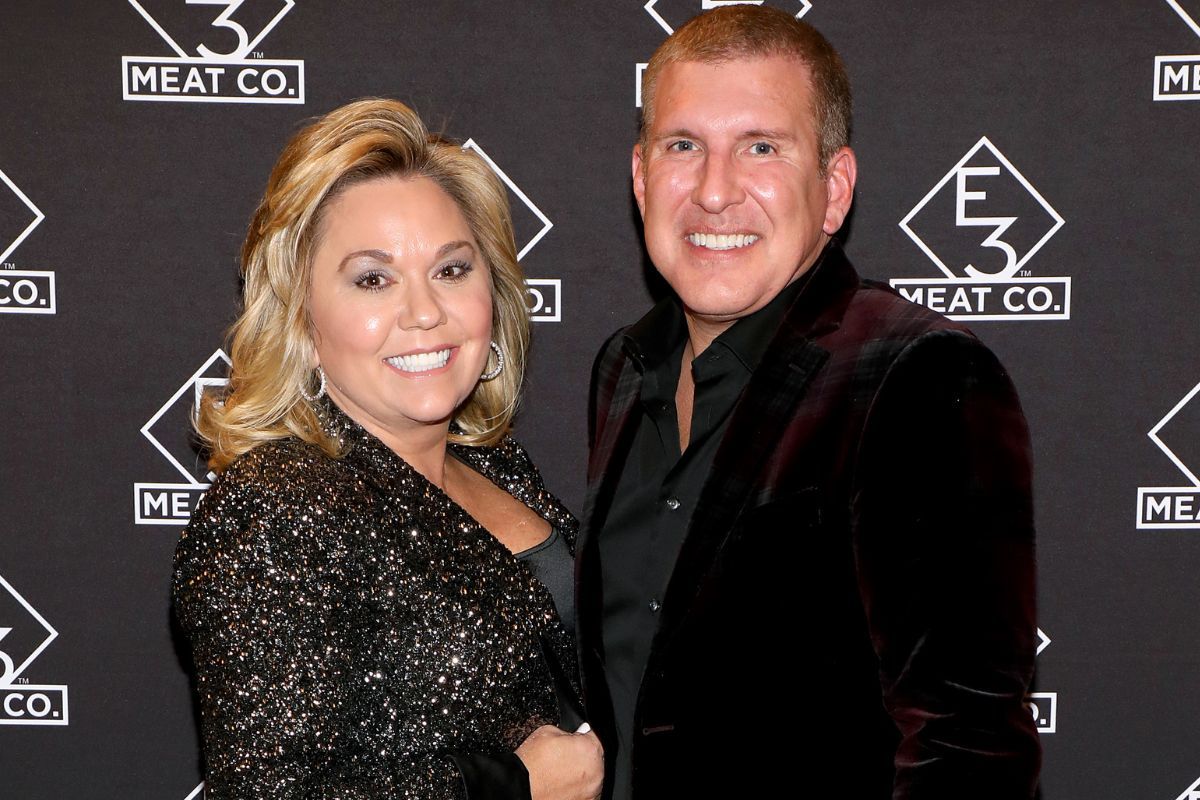
One year after receiving a controversial pardon from President Trump, Todd Chrisley and Julie Chrisley still face more than $1.5 million in tax debt. The financial burden remains a significant hurdle for the couple as they attempt to rebuild their lives following their legal battles.
According to court records, the Internal Revenue Service (IRS) filed a tax lien totaling $1,571,452 in Davidson County, Tennessee, on Aug. 19. The lien details two primary unpaid tax assessments: $142,410.72 for the tax period ending Dec. 31, 2021, and $1,429,041.89 for the period ending Dec. 31, 2022. These assessments were dated Dec. 5, 2022, and Dec. 11, 2023, respectively.
The couple was originally convicted in 2022 on charges of conspiring to defraud banks and evade federal taxes, with prosecutors alleging they secured $36 million in fraudulent loans using falsified financial records. Todd was sentenced to 12 years in prison, while Julie received a 7-year sentence, with both reporting to prison in January 2023. Although President Trump issued a pardon in May 2025 that led to their release, the presidential action did not absolve them of their outstanding federal tax obligations.
Since their return to public life, the couple has participated in the Lifetime docuseries The Chrisleys: Back to Reality and launched their Chrisley Confessions 2.0 podcast. Addressing rumors regarding their financial status in a September 2025 interview with Nightline, Todd remained cryptic about his current bank balance, stating, "Do you know how much is in my bank account?" When pressed for specifics, he noted that his financial situation was not what critics had referenced.
Their daughter, Savannah Chrisley, who joined the interview, emphasized the family's ongoing efforts to move forward. "You guys got out and you immediately started working. You’re building your life back," she said. Todd attributed their current path to "the grace of God," even as the substantial tax lien remains a matter of public record.